
A late delivery ruins more than dinner plans. It costs trust, and trust is hard to win back once a customer feels let down. Most of that damage happens in the final stretch of the journey, the last few miles between the delivery hub and the customer’s front door.
This piece looks at the last mile delivery challenges that trip up delivery businesses of every size, from small courier startups to national retailers. It also covers the fixes that are working right now, not vague advice, but the tools and habits that actually move the needle.
What Last Mile Logistics Actually Means
Last mile logistics is the final leg of a shipment’s journey, the part that runs from a warehouse, depot, or sorting hub to the customer’s door. The distance covered is usually short, sometimes just a few miles, but it’s the most expensive and least predictable stretch of the whole supply chain.
A truck moving a thousand packages between two warehouses follows one route and one schedule. A last mile driver might make seventy or eighty stops in a single shift, and every stop comes with its own traffic pattern, parking situation, and chance the customer isn’t even home. That gap in predictability is exactly why the last mile gets so much attention compared to earlier stages of the shipment.
The Main Last Mile Logistics Challenges
Every delivery business runs into some version of the same challenges of last mile delivery sooner or later. Here’s where they usually show up first.
1. Cost Keeps Climbing
One widely cited estimate from Business Insider puts last mile costs at 53 percent of total shipping spend, more than the first mile and mid mile stages combined. Free shipping offers push this higher, and retailers absorb the delivery cost to stay competitive with bigger players.
That expense rarely shows up as one line item. It’s spread across:
- Fuel and vehicle upkeep
- Driver wages and overtime
- Failed delivery attempts and redelivery trips
- Free or discounted shipping absorbed to compete
That’s the last mile delivery problem in a nutshell: not one big expense, but a dozen small ones adding up quietly until the year-end numbers land on someone’s desk.
2. Customers Want It Fast
Two to three day shipping used to feel impressive. Research from McKinsey found that 90 percent of online shoppers now see it as the baseline, and roughly 30 percent expect same day delivery to be an option. That expectation doesn’t ease up for small businesses just because they don’t have a warehouse network the size of Amazon’s.
Meeting it means tighter delivery windows, more frequent routes, and less room for error. A single missed window can turn into a canceled order or a bad review, and reviews travel faster than any delivery van does.
3. Cities Are Getting Harder to Deliver In
Dense neighborhoods and narrow streets slow everything down. Parking is limited, loading zones fill up fast, and large delivery trucks struggle with tight turns that a smaller van would handle without a second thought.
Rural and suburban routes bring a different last mile delivery problem: longer distances between stops, paired with customers who still expect the same fast service as someone living downtown. Shippers can’t pick and choose which areas to serve if they want to stay competitive across a whole region.
That mix of dense cities on one side and spread out suburbs on the other is part of what makes the challenges of last mile delivery look so different from one zip code to the next. A routing plan built for one rarely works for the other without changes.
4. Nobody Can See the Package Mid Route
Plenty of delivery operations still run on manual updates and paper logs. Without live tracking, dispatchers find out about a delay only after a customer calls asking where their order is.
That lack of visibility turns every disruption into a surprise. A blocked road, a mechanical issue, or a driver running behind schedule all become problems the business discovers too late to actually fix in real time.
5. Failed Deliveries Waste the Whole Trip
A driver who shows up and finds nobody home has to reschedule, and that redelivery costs almost as much as the first attempt did. Multiply that across a fleet running dozens of routes a day, and the wasted miles add up fast.
Signature requirements make this worse. Even a reliable customer might not be home at 2pm on a Tuesday, and the package heads back to the depot for another try, another driver hour, and another shot at the same delivery.
What Actually Fixes the Challenges of Last Mile Logistics
None of this means last mile Logistics is unsolvable. It means the fixes have to match the specific problem, not just throw more drivers or more vehicles at it.
1. Route Optimization Software
This is usually the first real fix, and the highest impact one. Modern routing tools don’t just suggest a path between stops, they read live traffic, weather, and road conditions, then rebuild the route as conditions change through the day. It’s the same principle platforms like Shipox use to keep drivers moving instead of idling at a red light three blocks from where they need to be.
The result is fewer wasted miles and a dispatcher who can see the whole fleet’s progress on one screen instead of guessing. A good routing tool typically handles:
- Live traffic and road closure updates
- Delivery window and time slot conflicts
- Vehicle capacity and load balancing across a fleet
- Multi-stop sequencing based on real drive times, not straight-line distance
2. Real Time Tracking and Notifications
Sending customers a text or app alert when their order is out for delivery cuts down on the “where is my package” calls that eat up support time. It also gives customers an actual reason to be home when the driver shows up.
Live tracking does the same job for dispatchers internally. If a driver falls behind, the team knows before the customer does, and can adjust the route or send a heads up instead of letting a small delay turn into a formal complaint.
3. Pickup Points and Lockers
When home delivery keeps failing at the same address, a fixed pickup location solves the redelivery problem outright. Customers grab their order from a nearby locker, retail counter, or convenience store on their own schedule instead of waiting around for a driver who may or may not show up on time.
This works especially well in dense apartment buildings and busy downtown blocks, where drivers lose real time circling for parking. It also cuts the number of failed delivery attempts a business has to absorb every month.
4. Keeping Drivers Instead of Replacing Them
Experienced drivers know their routes, know which buildings have loading docks, and build a working rapport with regular customers along the way. Losing that experience and starting over with a new hire is expensive in ways that rarely show up on a spreadsheet right away.
Fair pay, predictable schedules, and incentives for drivers who consistently hit their delivery windows keep good people around longer. Retention ends up being a delivery solution as much as it is a staffing one.
5. Drones and Robots, Slowly
Drone and sidewalk robot delivery gets a lot of press, but most of it is still limited to pilot programs in specific neighborhoods rather than everyday use. Weather, local regulation, and payload limits keep the technology from scaling the way some headlines suggest it already has.
For now, it’s worth watching rather than betting an entire delivery strategy on. Route optimization and driver based delivery will carry most of the volume for years to come, drones or no drones.
Where Software Like Shipox Fits In
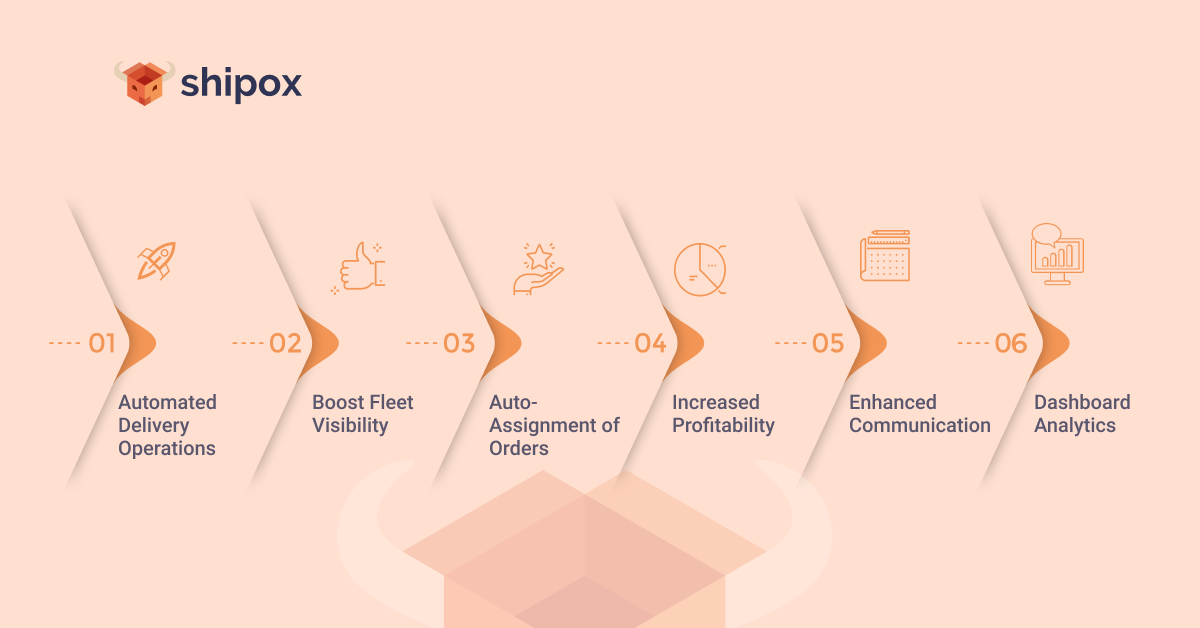
Most of the fixes above depend on having one system that actually connects them, instead of a route planner here and a separate tracking app there. This is the gap that platforms like Shipox are built to close. Shipox brings several pieces together in one place:
- Route optimization
- Live order tracking
- Driver and customer apps
- Order management
So a business isn’t stitching together three separate tools to solve one last mile delivery problem. For a smaller courier or a retailer building out its own delivery arm, that kind of setup usually means fewer missed windows and a clearer picture of where every order actually is at any given moment.
Conclusion
Last mile delivery challenges aren’t going away. Customer expectations keep climbing, cities keep getting denser, and the cost of the final stretch keeps eating a bigger share of every shipment that goes out the door.
What’s changed is how much of it can actually be fixed. Route optimization, live tracking, pickup points, and better driver retention address specific pain points instead of throwing more resources at a vague problem. Businesses that treat the last mile as its own discipline, with the right tools behind it, tend to spend less to deliver more, and keep the customers who complained about a late order the loudest.
Get those pieces right, and the challenges of last mile delivery stop feeling like a daily fire drill. They start looking like just another part of running the business well.